Curly Hair Chart: Discover Your Curl Type and Styling Techniques
Contents
hide
Understanding the Basics of Hair Typing
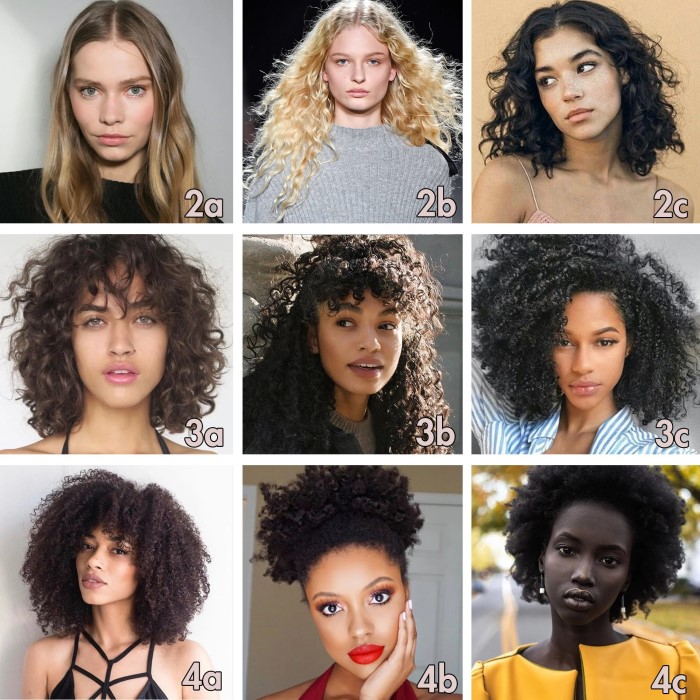
Many people struggle to identify their specific hair texture. They often buy products that do not work. Consequently, they feel frustrated with their daily routine. The solution often lies in understanding a simple tool. This tool is the curly hair chart. It categorizes hair into specific groups based on texture. Furthermore, it helps you understand the shape of your strands. You might have straight, wavy, curly, or coily hair. Each category has unique needs. Therefore, identifying your type is the first step to healthy hair. This knowledge empowers you to make better choices. You stop fighting your natural texture. Instead, you learn to embrace and enhance it.
Additionally, this chart breaks down categories into subtypes. This provides a more precise analysis. For instance, wavy hair is not just one type. It ranges from loose waves to almost curly. Understanding these nuances changes everything. It transforms your relationship with your hair. You will save money on ineffective products. Moreover, you will achieve styles you thought were impossible. This guide will explore the different types in detail. We will also discuss the best care practices for each.
The Science Behind the Curl Patterns
Hair texture is determined by the shape of the hair follicle. A perfectly round follicle produces straight hair. However, an oval or elliptical follicle creates curls. The more asymmetrical the follicle, the curlier the hair becomes. Consequently, genetics play a massive role in this process. You cannot change your follicle shape. Therefore, your natural hair type is permanent. The curly hair chart visualizes these biological differences.
It allows us to see the spectrum of human hair. Furthermore, the angle at which the hair grows affects the curl. Hair that grows straight out tends to be straight. Hair that grows at an angle creates curves. Additionally, the disulfide bonds in the hair shaft contribute to the shape. More bonds mean curlier hair. Fewer bonds result in straight strands. This scientific background explains why certain products work for some but not others. For example, heavy oils might weigh down wavy hair. Yet, they are essential for coily hair. Understanding the science helps you respect your hair. It is not just about aesthetics. It is about biology and chemistry. Thus, you can approach hair care with logic and knowledge.
Exploring Type 2 Wavy Hair
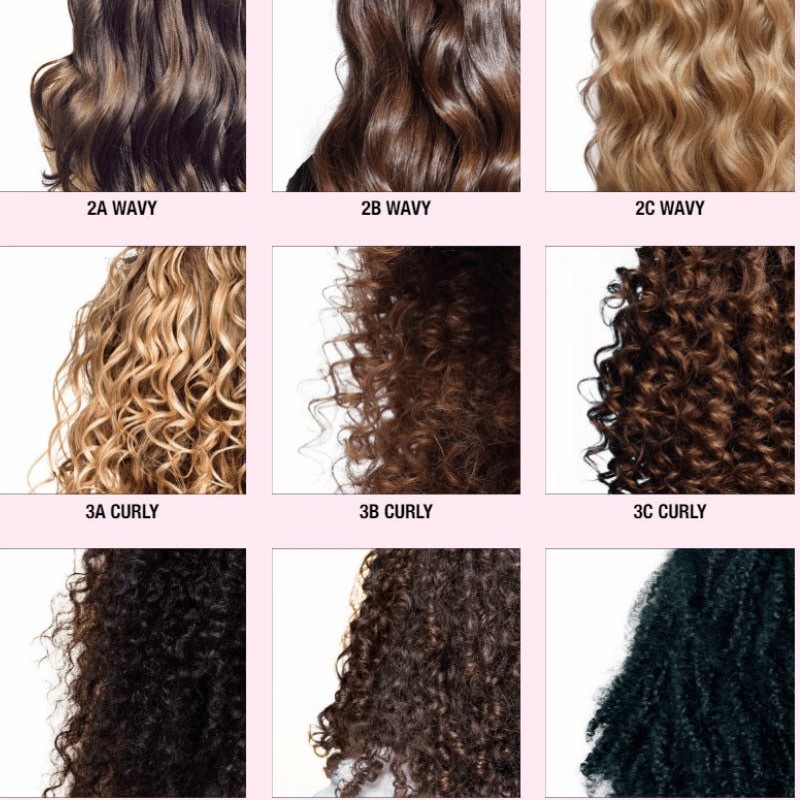
Type 2 hair is the category for waves. It sits between straight and curly on the spectrum. This hair type often struggles with frizz. Therefore, it requires a delicate balance of moisture. Type 2A hair features a loose, tousled texture. The “S” wave is subtle and open. Consequently, it is easily weighed down by heavy products. You should use lightweight mousses or gels. Type 2B hair forms a more distinct “S” shape. It starts from the mid-length of the strand.
This type is more prone to frizz than 2A. Therefore, you might need slightly more hold. Type 2C hair is thick and coarse. The waves are well-defined and almost form spirals. Furthermore, this subtype is the most resistant to styling. It often needs stronger hold products. People with Type 2 hair should avoid brushing it dry. Brushing disrupts the wave pattern and creates a frizzy mess. Instead, you should brush it wet with conditioner. This method defines the natural wave. Additionally, scrunching products into the hair helps formation. Air drying is often the best method. Diffusers can also work well if used on low heat.
Mastering Type 3 Curly Hair
Type 3 hair is what most people imagine when they think of curls. It forms a distinct “S” or spiral shape. Furthermore, it has a lot of natural bounce. However, it is prone to dryness and frizz. Type 3A curls are large and loose. They are about the size of a piece of sidewalk chalk. Consequently, they need moisture but not too much weight. Type 3B curls are tighter and springier. They range from bouncy ringlets to tight corkscrews.
The texture is often coarse. Therefore, creams and gels work best here. Type 3C curls are tight corkscrews. They are densely packed and have a lot of volume. This subtype is often referred to as “botticelli” curls. It requires significant moisture to prevent breakage. People with Type 3 hair should avoid sulfates. These harsh detergents strip natural oils. Instead, use co-washing or sulfate-free shampoos. Additionally, the “praying hands” method applies product evenly. This reduces frizz and clumps curls together. Pineappling the hair at night protects the style. It prevents flattening while you sleep.
Caring for Type 4 Coily Hair
Type 4 hair is beautiful and delicate. It features tight coils, zig-zags, or no visible curl pattern. Consequently, it is the most fragile hair type. It has fewer cuticle layers than other types. Therefore, it is highly susceptible to breakage. Type 4A hair has tight coils with a distinct “S” pattern. It retains moisture better than other Type 4 subtypes. However, it still needs intense hydration. Type 4B hair has a “Z” pattern. The bends are sharp and angular.
It feels like cotton to the touch. Thus, it requires heavy butters and oils. Type 4C hair has no defined curl pattern. It is tightly coiled and extremely delicate. Shrinkage is very common with this type. Consequently, gentle handling is non-negotiable. Protective styles are excellent for Type 4 hair. They shield the ends from environmental stress. Furthermore, the LOC method is highly effective. This stands for Liquid, Oil, and Cream. It layers products to seal in maximum moisture. You should also limit heat styling. Heat can cause irreversible damage to these fragile strands. Finger detangling is safer than using combs or brushes.
The Role of Porosity and Density
The curly hair chart focuses on shape. However, porosity and density are equally vital. Porosity refers to the hair’s ability to absorb moisture. High porosity hair has gaps in the cuticle. It absorbs moisture quickly but loses it just as fast. Therefore, it needs heavy sealants. Low porosity hair has a tightly bound cuticle. It resists moisture but holds it well once absorbed. Consequently, it needs lightweight, water-based products.
You can test porosity with a simple water glass test. Density refers to how many strands are on your head. High density hair looks very full. Low density hair looks thin. These factors influence which products you choose. For example, a heavy oil might work for high porosity, thick hair. But it would be disastrous for low porosity, fine hair. Thus, you must consider these variables alongside your curl type. They complete the picture of your hair health. Ignoring them often leads to product failure. You might have the right curl type product. But if the porosity is wrong, it will not work.
Essential Styling Techniques for Definition
Styling curly hair requires specific techniques. You cannot just apply product and go. The application method matters greatly. First, always start with wet or damp hair. Products distribute more evenly on wet strands. Furthermore, water is the ultimate moisturizer. Sectioning the hair is another crucial step. It ensures every strand gets coated. Consequently, you avoid frizzy patches. The “rake and shake” method is popular for waves and curls. You rake the product through the hair. Then, you shake the strand to encourage formation. Another technique is “shingling.” This involves applying product in thin layers.
It creates maximum definition for tight curls. Additionally, plopping is great for wavy and curly types. It involves wrapping the hair in a cotton t-shirt. This absorbs excess water without causing friction. Thus, it reduces frizz significantly. You should also pay attention to drying. Air drying is the gentlest option. However, if you use a dryer, use a diffuser. A diffuser disperses heat evenly. It does not disturb the curl pattern. These techniques maximize your natural texture.
Common Mistakes to Avoid
Many people unknowingly damage their curls. They make simple mistakes in their routine. One major error is over-washing. Curly hair is naturally drier than straight hair. Therefore, it does not need daily shampooing. This strips away necessary oils. Consequently, the hair becomes dry and brittle. You should aim to wash once or twice a week. Another mistake is using the wrong tools. Terrycloth towels are rough on curls.
They cause friction and breakage. Instead, use a microfiber towel or an old t-shirt. Furthermore, skipping deep conditioner is detrimental. Curls thrive on hydration. A weekly deep conditioning treatment restores moisture. It keeps the elasticity intact. Heat damage is also a significant issue. Flat irons and blow dryers can permanently alter your curl pattern. Therefore, always use a heat protectant. Better yet, avoid heat entirely. Finally, touching your hair too much causes frizz. Once the product is applied, let it be. Do not run your fingers through dry curls. This separates the strands and creates a fuzzy texture.
FAQ
What are 2A, 2b, 2C, 3A, 3B curls?
These numbers and letters classify hair texture. Type 2 hair is wavy. 2A is a loose wave, 2B is a medium wave, and 2C is a thick wave. Type 3 hair is curly. 3A has loose curls, while 3B has tighter, springy ringlets.
Why does Gen Z like curly hair?
Gen Z values authenticity and self-expression. They embrace natural beauty standards over straightened styles. Consequently, they celebrate natural curls as a form of individuality. Social media has also helped popularize diverse hair textures.
Is 3B or 3C curlier?
3C is curlier than 3B. 3B curls are typically the size of a marker or sidewalk chalk. In contrast, 3C curls are tight corkscrews. They are about the size of a pencil or straw. Therefore, 3C has a tighter spiral pattern.
How do I determine my curly hair type?
You should start with freshly washed hair. Let it air dry without product. Observe the shape your hair takes. Compare it to pictures on a curly hair chart. You can also test the strand thickness and density for a full analysis.
Conclusion
Embracing your natural texture is a journey. It requires patience and experimentation. The curly hair chart serves as a roadmap for this journey. It helps you identify your starting point. However, remember that hair is unique to each individual. You might have a mix of types on your head. That is perfectly normal. The goal is to find what works specifically for you. Use the chart as a guide, not a strict rulebook. Combine this knowledge with proper hydration and gentle care. You will soon see a transformation. Your curls will become healthier and more defined. You will feel more confident in your natural beauty. So, take the time to analyze your hair. Invest in the right products. Master the techniques discussed here. Your hair will thank you for the effort. Ultimately, healthy hair is beautiful hair, regardless of the type.